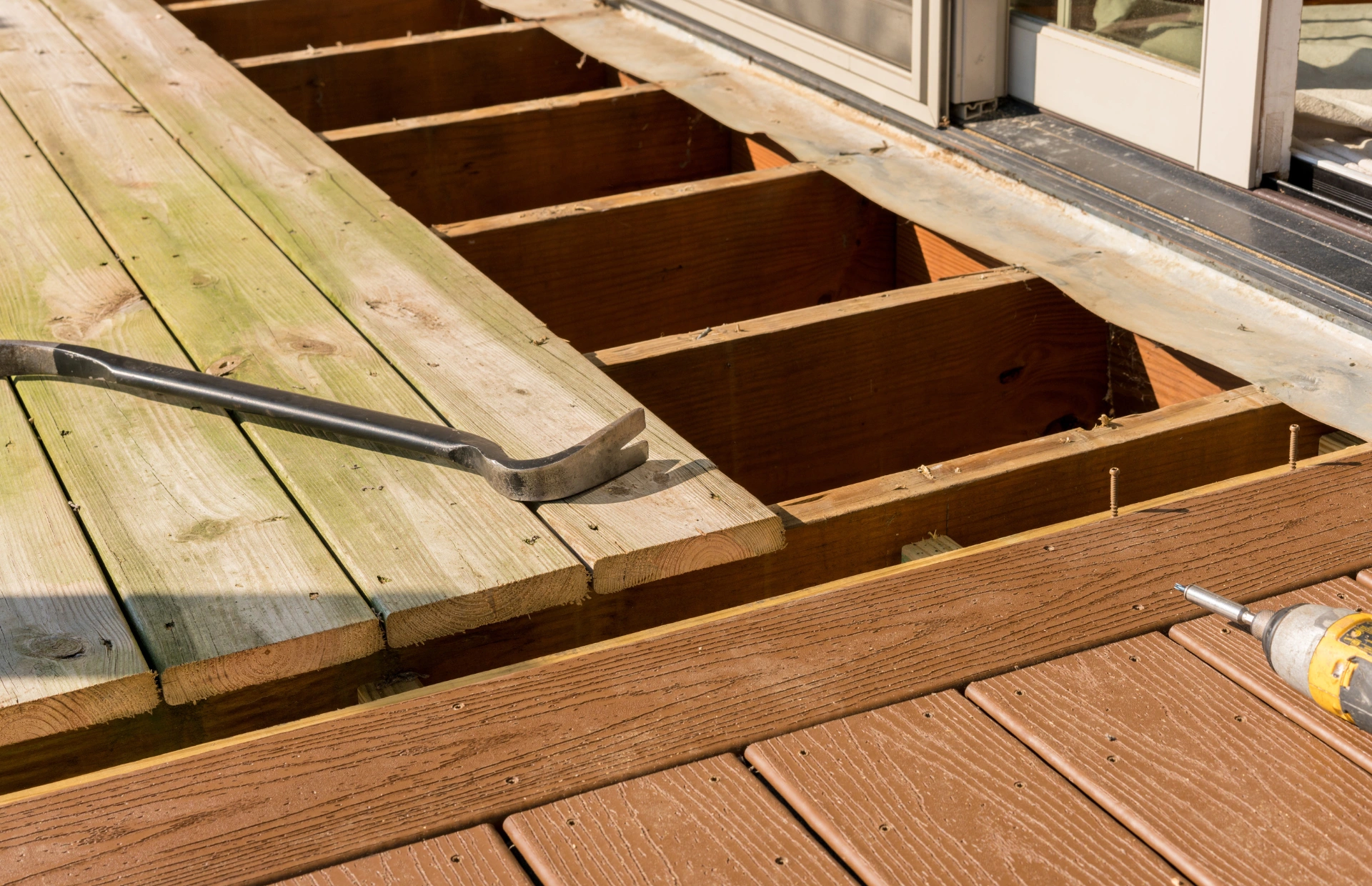
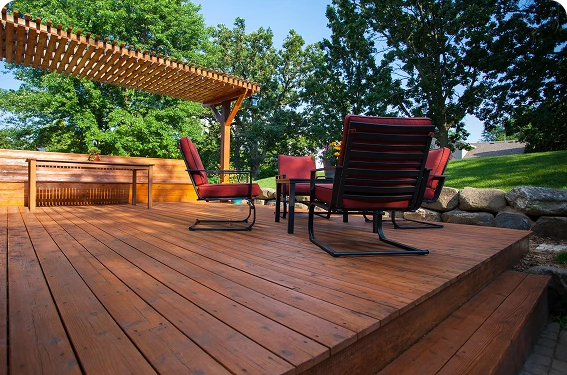
If you’re planning a new deck in Ocean County, one of the first decisions you’ll face is the same one almost every homeowner asks us about: composite or wood? Both are great options. Neither is universally better. The right answer depends on your budget, how much maintenance you’re willing to do, and how long you plan to stay in the home. Here’s an honest breakdown from a contractor who works with both every week.
What Is Composite Decking?
Composite decking is an engineered board made from a blend of wood fiber and plastic — typically with a protective polymer cap on the outer layer. Brands like TimberTech, Trex, Fiberon, and MoistureShield have spent decades refining these products to look and feel closer to real wood while eliminating most of the maintenance headaches.
The result is a board that resists fading, staining, rot, and splintering. Most premium composites come with 25 to 30-year warranties — something no wood product can match.
What Is Pressure-Treated Wood Decking?
Pressure-treated lumber is the traditional choice. It’s real wood — typically Southern yellow pine — treated with preservatives that resist rot and insect damage. Cedar and redwood are natural alternatives that resist decay without chemical treatment and offer a more refined, natural look.
Wood decks have been the standard for generations because they work. They’re structurally reliable, widely available, and at the right price point for budget-conscious homeowners.
The Key Differences
Maintenance Wood requires regular attention — annual cleaning, staining or sealing every 2 to 3 years, and occasional board replacement as the wood ages. Composite requires almost none. An annual wash with soap and water is typically all it needs. For Shore homeowners who spend summers using the deck rather than maintaining it, that difference matters.
Durability in a Coastal Environment This is where composite wins clearly for Ocean County properties. Salt air, humidity, UV exposure, and the freeze-thaw cycles of a New Jersey winter accelerate wood’s natural aging process significantly. Composite — especially capped composite — is engineered specifically for these conditions.
Upfront Cost Wood is less expensive upfront. A pressure-treated deck will typically cost 20 to 40 percent less than a comparable composite deck at the time of construction.
Long-Term Value When you factor in maintenance costs over 10 to 15 years — staining, sealing, board replacement — composite often comes out ahead financially. It also holds its appearance better, which matters at resale.
Aesthetics Wood has a natural warmth that composite has worked hard to replicate but hasn’t fully matched. If the look and feel of real wood is important to you and you’re committed to maintaining it, a cedar or hardwood deck is genuinely beautiful. If you want the look of wood without the work, today’s composite options are remarkably close.
Which Should You Choose?
For most Ocean County homeowners — especially those with properties near the water, in high-humidity areas, or who want minimal upkeep — composite is the better long-term investment. For homeowners on a tighter budget who are comfortable with regular maintenance, pressure-treated wood is a solid, proven choice.
The best way to decide is to walk through both options with a contractor who works with both honestly. If you’re in Ocean County, Toms River, Point Pleasant, Stafford Township, or anywhere along the Shore, we’re happy to do exactly that at no cost.
Call MMAIR at (609) 661-2436 or contact us online for a free estimate and material consultation.